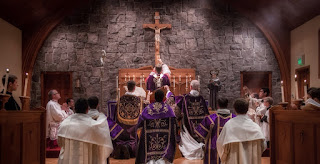
19. When once men recognize, both in private and in public life, that Christ is King, society will at last receive the great blessings of real liberty, well-ordered discipline, peace and harmony.
Pope Pius XI explicitly linked the moral and social crises of his time to this fundamental rejection of Christ’s rule, most notably in his landmark encyclicals Quas Primas (1925) and Divini Redemptoris (1937).

In Quas Primas, issued on 11 December 1925, Pius XI warned that the “manifold evils” afflicting the world—such as national hatreds, political instability, and the rise of totalitarianism—were rooted in a single tragic cause: “the majority of men had thrust Jesus Christ and His holy law out of their lives” (no. 24). He stressed that as long as individuals and nations refused to submit to the rule of the Savior, there could be no realistic prospect of lasting peace among nations. True peace, he argued, can only be achieved when Christ reigns both in individual souls and throughout society. To emphasize this eternal truth, the encyclical instituted the Feast of Christ the King, affirming that Jesus’ sovereignty extends beyond the spiritual realm into public life, governance, and the destiny of nations.
Twelve years later, in Divini Redemptoris (1937), Pius XI condemned atheistic communism as a system that explicitly denies God and attempts to reconstruct the social order without reference to divine law. He argued that such a rejection of divine authority leads inevitably to moral decay, political violence, and the erosion of the family, private property, and human dignity. Moreover, he offered a stern historical reminder: “there would be neither Socialism nor Communism today if the rulers of the nations had not scorned the teachings and maternal warnings of the Church.”

The danger of seeking peace without Christ is not merely a modern oversight; it is a spiritual trap warned of in Holy Writ. Scripture foretells that apostate powers and worldly rulers will promise order while orchestrating spiritual ruin. As the prophet Daniel warned:
“And through his cunning he shall cause deceit to prosper in his hand; and in his heart he shall exalt himself, and with peace he shall destroy many; and against the Prince of princes he shall rise up; but without a hand he shall be broken.” — Daniel 8:25
Pope Pius XI, Encyclical "Quas Primas":


"The true and only peace of souls in this world consists in being filled with the love of God and animated by the hope of heaven, to the point of considering the successes or reverses of this world as of little account [...]. He is mistaken who imagines that he will be able to find peace in the enjoyment of the goods of this world and in riches. The frequent disturbances here below and the end of this world should convince such a man that he has built the foundations of his peace upon sand."
— (BEDE THE VENERABLE, Homily 12 for the Vigil of Pentecost)


In stark contrast to these destructive ideologies—and the apostate assemblies at Assisi that promise a false, deceptive peace built on Masonic foundations of religious indifferentism, atheistic humanism, and Marxist ideology—Pius XI’s message remains steadfast and urgently relevant today. The moral and social crises of our modern age stem directly from the rejection of the Lordship of Christ. True peace cannot be manufactured by human decree or secular globalism; it can only be realized when we restore the reign of the Prince of Peace over both the individual heart and the social order.

Philippians 2:10-11
That in the name of Jesus every knee should bow, of those that are in heaven, on earth, and under the earth:
And that every tongue should confess that the Lord Jesus Christ is in the glory of God the Father.
Among the profound fruits of the Holy Spirit, true peace holds a central place (cf. Galatians 5:22–23)—it is that deep interior tranquility and harmony experienced only through living in communion with God. Modern culture often reduces peace to a mere worldly sentiment, commonly invoking the image of a white dove as a secular emblem of humanistic unity. In doing so, it forgets that the Dove is, above all, the sacred symbol of the Holy Spirit, whose divine function is sanctification: calling man to separate himself from sin and be conformed to God.
True peace, therefore, cannot co-exist with deliberate rebellion against divine truth. When man obstinately resists grace, he banishes the Holy Spirit from his soul. Holy Tradition—echoing the solemn scriptural warnings concerning blasphemy against the Holy Spirit—identifies six specific sins against Him, including the explicit contradiction of revealed truth, obstinacy in sin, and final impenitence. To demand peace while persisting in an impenitent life is a tragic delusion. As St. Paul warns: “For the mind set on the flesh is death, but the mind set on the Spirit is life and peace” (Romans 8:6).
Genuine peace is never an external compromise manufactured by human decree, nor is it promised to those who dwell in spiritual rebellion. It is an internal fruit reserved for the children of God who keep His commandments, amend their lives, and allow the Holy Spirit to dwell within them (cf. 2 Thessalonians 2:13). If modern society genuinely desires the fruit of peace, it must stop seeking false secular symbols and return to the Source of all holiness, restoring the reign of the Prince of Peace over both the individual heart and the social order.
Consequently, any attempt to seek unity or peace by compromising divine truth or abandoning God's laws is a tragic illusion. In his encyclical Humani Generis, Pope Pius XII condemned this dangerous and destructive irenicism, warning that:
"Another danger is perceived which is all the more serious because it is more concealed beneath the mask of virtue... But some through enthusiasm for an imprudent 'eirenism' seem to consider as an obstacle to the restoration of fraternal union, things founded on the laws and principles given by Christ and likewise on institutions founded by Him, or which are the defense and support of the integrity of the faith, and the removal of which would bring about the union of all, but only to their destruction."
Pursuing a superficial peace apart from the Holy Spirit and divine truth ultimately leads to ruin, recalling the solemn warning of Scripture: "When people say, 'There is peace and security,' then sudden destruction will come upon them as travail comes upon a woman with child, and there will be no escape" (1 Thessalonians 5:3). True peace can never exist at the expense of holiness, repentance, and obedience to God.
St. Thomas Aquinas (1225-1274)
“It is absurd for a heretic to say that he believes in Jesus Christ. To believe in a person is to give our full consent to his word and to all he teaches. True faith, therefore, is absolute belief in Jesus Christ and in all He taught. Hence, he who does not adhere to everything Jesus Christ has prescribed for our salvation does not have any more of the Doctrine of Jesus Christ than the pagans, Jews and Mohammedans.”

Apostate Robert Prevost on Nostra Aetate: 💀"the Catholic Church rejects nothing that is true and holy in these religions, which “reflect a ray of that truth which enlightens all people”"


Anne Catherine Emmerich’s Prophecy: “They built a large, singular, extravagant church which was to embrace all creeds with equal rights: Evangelicals, Catholics, and all denominations, a true communion of the unholy with one shepherd and one flock. There was to be a Pope, a salaried Pope, without possessions. All was made ready, many things finished; but, in place of an altar, were only abomination and desolation.”
2 Thessalonians 2:11-12For this reason, God imposes on them a powerful delusion. They believe what is false, so that all who have not believed the truth but instead have taken pleasure in wickedness will be condemned.
Sins against faith:
Apostasy: This is the complete abandonment of the Christian faith received in baptism; for example, Catholics who change religions or those who, without formally changing religions, have completely distanced themselves from the Catholic faith, falling into rationalism, pantheism, Marxism, Freemasonry etc.
Father E. Sylvester Berry: “With the beast of Antichrist only the horns have diadems as symbols of royalty or governing power. The heads are branded with names of blasphemy. (Apocalypse, 13:1) Hence they symbolize the sins and errors that will afflict the Church . . . in this final struggle to prevent the universal reign of Christ all forms of sin and error will be marshaled against the Church . . . all errors which have afflicted the Church may be summed up in these seven: Judaism, paganism, Arianism, Mohammedanism, Protestantism, rationalism, and atheism.


Evil Deception: Praying for "peace" with those who reject the Prince of Peace.
"This peace is attained neither through the bonds of the most intimate friendship nor through a deep similarity of spirit, if all of it is not grounded in a total communion of our will with the will of God. A friendship founded upon sinful desires, upon pacts springing from injustice, and upon agreements arising from vice has nothing to do with the attainment of this peace."
— (SAINT LEO THE GREAT, Sermon 95, on the Beatitudes)